

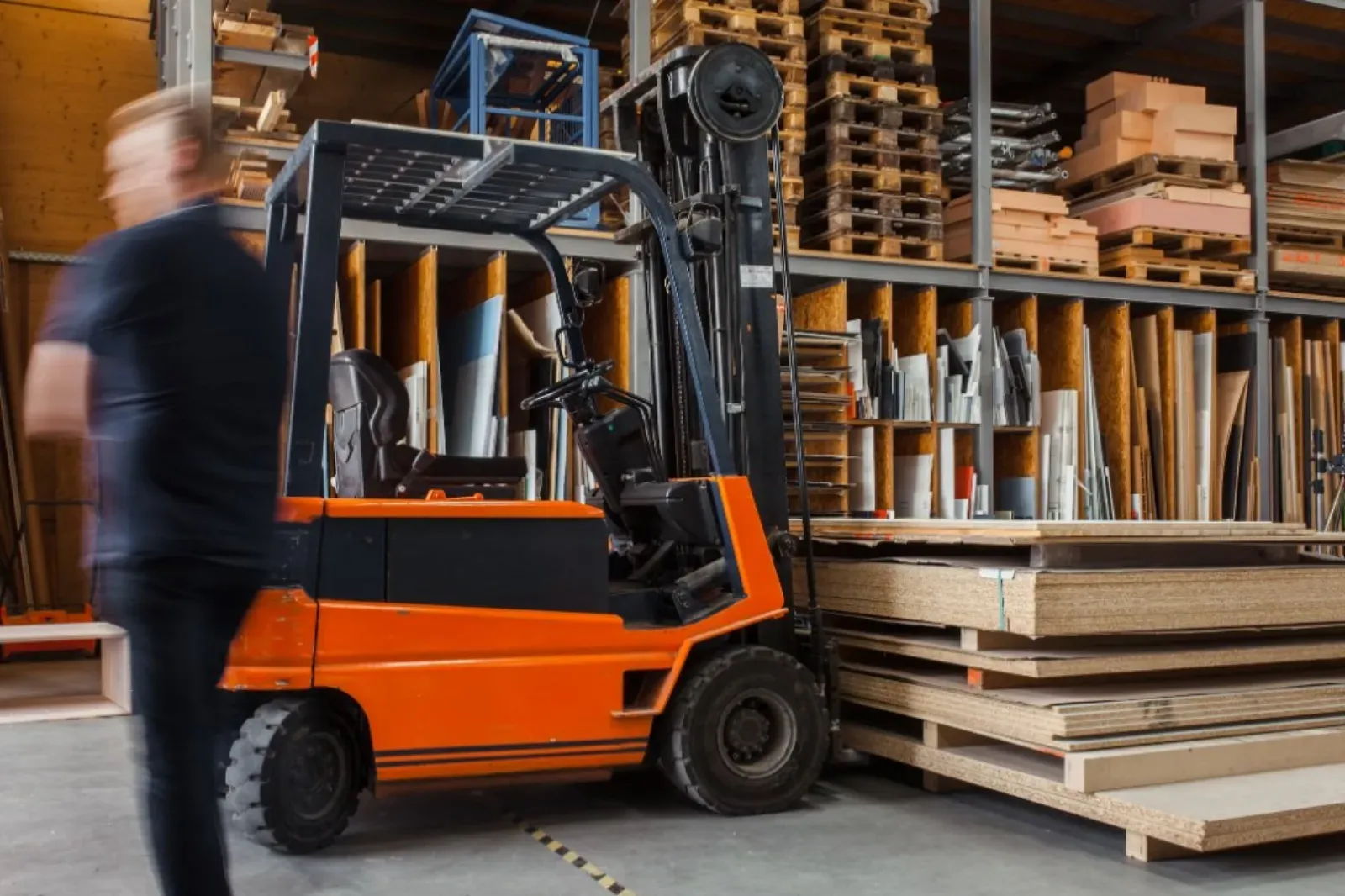
A trailer from Germany pulls up to the terminal at 5:40, forty minutes after the booked window. Four distribution trucks have slots from 6:00, and drivers sit in their cabs with load lists. The goods from that trailer must not touch a rack, because at 6:40 they have to move on to four cities.
That is cross-docking in logistics in its purest form: not a warehouse model, but time discipline. I describe it from the dispatcher’s chair and from under the ramp, with numbers, terminal layout, and an honest section on when it is better to walk away.
What Is Cross-Docking and How It Differs from Warehousing
Cross-docking is a goods-handling model in which a shipment moves from the inbound dock straight to the outbound dock without being put into storage. Goods sit in a buffer zone from a few dozen minutes to a few hours, and the terminal acts as a transfer point for pallets, not a place to store them.
A Definition the Dispatcher and Sales Rep Can Both Use
For sales, one sentence is enough: cross-docking shortens the goods path because it skips the stage of sitting on a rack. The dispatcher needs the operational version: in a warehouse you plan space, in cross-dock you plan time, and the critical resource is a free dock at a specific hour.
Traditional Warehouse vs Cross-Dock: What Drops Out of the Process
Putaway into storage, picking from a shelf, and inventory of stock that does not exist on the books drop out of the process. Pallet touches fall from four (unload, putaway, retrieval, load) to two, and with direct transfer down to one.
Cross-Docking vs Transshipment and Consolidation: Where the Line Is
Transshipment is a technical change of transport mode, possible without any plan, for example after a trailer breakdown. Cross-docking is planned: the outbound load exists in the system before the truck stands at the ramp, and consolidation is one of its goals, not a separate model.
What Cross-Docking Means in Sea and Air Transport
In sea transport it means breaking down a container at a port terminal and splitting the goods across domestic trailers. In air freight, shipments from one flight are sorted next to the cargo terminal and move on within a few hours, because storage at the airport is too expensive.
Types of Cross-Docking
Cross-docking splits into two basic flow patterns: consolidation, where many small deliveries become one full-truckload, and deconsolidation, where one trailer breaks into many smaller shipments. On top of that come pre-distribution and post-distribution, plus planned, opportunistic, and transportation modes.
Consolidation Cross-Dock: Many Deliveries into One Load
Several suppliers bring less-than-truckload freight, and at the terminal it becomes one load for one lane: five deliveries of six pallets instead of five runs. The collection window is critical, because a late supplier forces a choice: hold the truck or leave pallets for tomorrow.
Deconsolidation Cross-Dock: One Trailer to Many Points
A full trailer arrives, import or delivery from a manufacturer’s central warehouse, and splits across eight local routes. The inbound stream is one, so operationally it is easier, but a truck that does not show up blocks the buffer zone for the remaining routes.
Pre-Distribution and Post-Distribution: Who Decides the Delivery Address and When
In pre-distribution the recipient address is known at the supplier, the pallet carries a label for a specific store, and the terminal only moves it onto the right truck. In post-distribution the split happens at the terminal based on current orders, which is why post-distribution dominates in international groupage.
Planned, Opportunistic, and Transportation Cross-Docking
The third split is system-level, the same one WMS-class systems use. The English equivalents are worth knowing because technical documentation uses only those.
| Mode | English equivalent | When the decision is made | Typical use |
|---|---|---|---|
| Planned | planned cross-docking | Before receipt, based on ASN and known demand | Retail network distribution, fixed routes |
| Opportunistic | opportunistic cross-docking | At receipt, when the system sees open demand | Gap fills, urgent goods |
| Transportation | transportation cross-docking | When designing flow between network locations | Regional hubs, inter-warehouse flow |
Planned gives the shortest handling because the transfer task exists before the truck arrives. Opportunistic is reactive and saves the day when the warehouse lacks goods that have just arrived, and transportation is a network decision, not a daily ramp call.
Cross-Docking in Practice: Amazon, Toyota, Walmart, and Polish Groupage
Four implementations and four different reasons: last-mile density, no space at the production line, in-store stock, and the cost per kilometre in groupage.
Amazon: Sort Centres and the Hub-and-Spoke Model in the Last Mile
In Amazon’s logistics operations, cross-docking handles flow between fulfilment centres, sort centres, and delivery stations, where parcels are split by postal codes. Goods carry no warehouse inventory, and the hub-and-spoke model densifies routes: truck delivery to a node, short-loop distribution.
Toyota: Milk Run and Just-in-Time Deliveries to the Production Line
At Toyota, cross-docking grew out of a lack of space at the line: a truck collects batches from several suppliers on a milk run route and delivers them to a transfer point at the plant. There the load is moved onto deliveries synchronised with production, and tolerance is measured in minutes, because delay means a line stoppage.
Walmart: The Case That Launched Cross-Docking in Retail
Walmart built a network of distribution centres operating as transfer terminals, where goods from suppliers went straight onto trucks to stores within a one-day drive. Success depended on data exchange, because without electronic advance notice and a shared label standard the operation could not work.
Polish Groupage: What an Overnight Shift Looks Like at a Terminal Near Łódź
A groupage terminal in central Poland runs in two waves: from 17:00 to 23:00 consolidation of lanes to Germany, the Czech Republic, and France, and from 4:00 to 8:00 deconsolidation of import onto local routes. The window to reset the hall between waves disappears first when inbound runs late.
When Cross-Docking Pays Off and When It Is a Trap
Cross-docking is not a better version of a warehouse, just a different tool. It pays off with high turnover and a predictable stream; it hurts with low turnover and chaos on the inbound side.
E-Commerce and Courier Parcels
In e-commerce, cross-docking is the default sort-centre model, because parcels have a known recipient and next-day delivery requires leaving the node the same day. The limit is the seasonal peak, when dock throughput becomes a real cap, and ad-hoc rented terminals carry the highest rates.
FMCG, Fresh Goods, and Retail Promotions
Fresh goods naturally lean toward cross-docking, because every hour on a rack eats shelf life, so dairy and bakery move through the terminal in a few hours. Promotions need throughput reserve for two or three days, and the bottleneck then is headcount on shift, not space.
Transit and International Groupage
In transit, cross-docking combines less-than-truckload freight into full-truckload loads and lets you change drivers mid-route, so the trailer keeps going and the driver heads home. Count the whole picture, because tolls, per diems, and working time go into the bill, which we break down in the article on differences between domestic and international transport.
When It Is Better to Walk Away
Four situations where cross-dock creates more problems than it solves. Low turnover, when goods wait to complete an order longer than one shift. Unpredictable inbound, where every window is fiction. No advance notice, because manual pallet counting eats the time gain. Goods requiring quality inspection, because quarantine means an occupied dock.
The Cross-Docking Process Step by Step
The cross-docking process covers five steps: advance notice with an inbound window, unload with SSCC label scanning, sorting in the buffer zone by outbound routes, loading the distribution truck, and closing documents (CMR, POD, transfer list). The whole thing typically fits in 30 to 90 minutes per trailer.
Advance Notice and Inbound Window
The supplier sends pallet count, weight, time, and registration number, and in EDI exchange the DESADV message handles that, the electronic delivery notice (ASN) with SSCC numbers. A slot without advance notice is useless, because you do not know how much work will stand at the ramp. If you collect notices by email and copy them into a spreadsheet, start with automating transport order planning.
Unload and Verification: SSCC Scan, Labels, Quantity Check
Every carrier is scanned by SSCC label, which both confirms receipt and assigns the pallet to an outbound shipment. The check is quantity and visual, not quality, and every variance is recorded at the ramp immediately, because after the trailer closes you cannot prove when a pallet went missing.
Sorting in the Buffer Zone: The Floor Is Not a Warehouse
This is where cross-dock fails most often, because pallets put down briefly in a random spot block forklift traffic. Two rules apply: every floor slot has a marked outbound route, and the buffer has a time limit, for example 4 hours, after which goods go into storage.
Outbound Load and Document Closure
Loading runs in reverse order to deliveries on the route, so what must come off first goes on last. Closure means three documents: CMR for the outbound leg, transfer list with carriers assigned to the truck, and POD after the run.
How Much Time You Really Have: SLA and Slot Length
A realistic window for a trailer with 33 pallets is 45 to 60 minutes with one forklift and scanning every carrier, plus 10 to 15 minutes for gate-in and departure. A slot set every 30 minutes with actual handling of 50 minutes builds delay through the whole shift.
How to Design a Cross-Dock Terminal: Layout, Docks, Throughput
You design a cross-dock terminal for flow, not capacity. The indicator that decides everything is the length of the pallet path from inbound ramp to outbound ramp.
Hall Shape: I, L, T, and X and Why the Narrow Rectangle Wins
The I shape, a narrow rectangle with docks on two opposite sides, gives the shortest pallet path, because the forklift runs straight through a hall 30 to 40 metres wide. L and T shapes save site constraints, X serves large nodes, but in each of them distances grow and traffic crossing points multiply.
How Many Inbound Docks per Outbound Dock
In deconsolidation one trailer feeds several trucks, so the setup is one inbound dock to two to four outbound docks, and the reverse for consolidation. Count docks for peak hour: a terminal handling 40 trucks per shift, half of them between 5:00 and 7:00, needs docks for that peak.
Buffer Zones, Floor Markings, and Forklift Traffic
The buffer zone needs dedicated slots marked with outbound dock numbers, because floor paint is cheaper and more effective than a rulebook. Split forklift traffic by direction, one aisle for inbound, one for outbound, because two-way traffic means yielding dozens of times per shift.
Manoeuvring Yard and Queue: The Space Everyone Forgets
Minimum is a waiting area for one third of the dock count and a turning radius that lets a set reverse without multiple steering corrections. When choosing a terminal to rent, instead of searching “cross docking warehouse near me” and taking the first listing, calculate distance from the transit corridor, check slot availability at peak hours, and access to online advance notice. A site 20 kilometres farther but with a free dock at 5:30 comes out cheaper than a nearby terminal with a queue.
Technology: What WMS Handles vs What TMS Handles
In a cross-dock operation, WMS handles goods: receipt, carrier identification, pallet assignment to a shipment, and quantity settlement. TMS handles the vehicle and time: advance notice, dock slot, gate-in sequence, ETA, and transport order. The boundary is the terminal gate and the moment of scan on entry.
Role Split: Goods Belong to WMS, Vehicle and Slot to TMS
The split sounds trivial until you see a company planning slots in WMS or running the transfer list in TMS, because then two systems hold two versions of the truth. The rule is simple: WMS answers where the pallet is, TMS answers when the truck arrives.
Labels, SSCC, Scanners, and EDI Exchange
A GS1 logistics label with an SSCC number lets you scan a pallet once and have its full contents without recounting cartons. Data exchange rests on three messages: DESADV (advance notice), RECADV (receipt confirmation with variances), and IFTMIN (transport order).
Cross-Docking in SAP EWM: Planned, Opportunistic, and Transportation
In SAP EWM, cross-docking is configured at warehouse process level and determination rules, the conditions under which the system creates a task from the inbound dock straight to the outbound dock. Planned mode needs data from advance notice and known demand, opportunistic mode needs rules checking open orders at receipt, transportation mode covers flow between network locations. You configure inbound and outbound zones, dock groups, task types, and time limits in the buffer.
What SAP EWM will not do for the planner: it will not negotiate advance notice with the supplier, it will not set a realistic slot length based on what comes off the trailer, and it will not predict that on Friday volume is 30 percent higher.
TMS and WMS Integration: Where Data Exchange Most Often Breaks
The most common failure point is the lack of a shared shipment identifier, because WMS works on delivery numbers, TMS on order numbers, and their link lives in one person’s spreadsheet. The second is exchange frequency, the third statuses: unload confirmation must return immediately, because dock release depends on it.
What Most Often Breaks Cross-Dock Operations
Cross-dock failures rarely come from missing equipment. Usually it is data that arrived too late or in the wrong form.
Late Inbound and the Domino Effect on Outbound Loading
The trailer from the opening of this article is forty minutes late, the slots of four trucks shift by the same amount and clash with the next deliveries, so after three hours terminal delay grows to two hours. Defence is two-stage: a 15-minute buffer between slots on one dock and a realistic ETA early enough to reorder the sequence. We describe scheduling strategies in the article on transport planning models.
No Advance Notice and Transfer Lists on Paper
A supplier without advance notice takes someone else’s slot, because the truck stands at the gate and must be handled, so someone else gets the delay. A paper list gives the same effect with delay: shortages surface in a claim two weeks later, when nobody remembers who loaded.
Label Errors and Mistakes at the Gate
An illegible label forces manual re-entry, which means a typo, so a pallet with the wrong address goes on the wrong truck and returns two days later. Gate mistakes are fixed cheaply, with a notice number shown to the driver and verified on entry instead of arrangements over the radio.
An Over-Ambitious Window: 30 Minutes for 33 Pallets
Someone set a 30-minute slot because that is what daily throughput suggested, but unloading 33 pallets with scanning and sorting takes 45 to 60 minutes, so every truck leaves late. Better to plan 12 trucks and handle 12 than plan 16 and push four to the next day.
How TMS Planning Cuts Ramp Time and Limits Empty Miles
Cross-dock lives on schedule quality. The transport system will not move a pallet for the operator, but it decides whether the pallet waits for the truck or the truck waits for the pallet.
Slots Tied to Real ETA, Not a Spreadsheet Schedule
A slot from a spreadsheet is an assumption; a slot updated with vehicle data is information that lets the dispatcher reorder gate-ins before drivers start calling. Integration of telematics with the slot plan updates ETA automatically, and what that precision is worth in money we settle in the article ETA Is Money.
Backhauls Built Around the Terminal
The terminal is the best place to look for backhaul freight, because it has traffic in both directions every day, so a truck that brought import takes a linehaul load the other way. In local distribution, a run ending 40 kilometres from the terminal is a natural candidate to collect from a supplier nearby.
One View of the Day: Who Is Standing, Who Is Moving, What Waits for Transfer
The dispatcher needs three pieces of information on one screen: which trucks are on the yard and at which dock, which are en route and with what ETA, and which pallets wait for transfer and by what time. In ONYX TMS that view covers advance notices, slots, vehicle statuses, and orders in one place, and ONYX TMS 2.0 adds features for cross-dock, intermodal, and dynamic time windows reacting to current ETA.
How Much Cross-Docking Cuts Shipment Handling Time: Numbers for a 20-Truck Fleet
The values below are an indicative calculation for an operator with a 20-truck fleet handling groupage and FMCG distribution in Poland. Treat them as a reference point for your own measurements, not a promise.
Dwell Time on Site
Indicative ONYX data based on groupage and FMCG operations in Poland, 2026. Typical ranges for a terminal with slot appointments.
| Handling model | Time on site (h) | What happens to the goods | When to use |
|---|---|---|---|
| Traditional warehouse with storage | 54 | Receipt, putaway to pallet location, picking, load | Low turnover, quality control, buffer stock |
| Consolidation cross-dock | 10 | Receipt, buffer until collection window closes, linehaul load | Groupage, LTL onto one lane |
| Deconsolidation cross-dock | 6 | Receipt, sort to routes, distribution load | Import, store delivery, last mile |
| Direct transfer | 2 | Trailer to trailer, no floor putaway | Pre-distribution, fresh goods, urgent deliveries |
The gap between 54 and 10 hours does not come from faster forklifts, but from removing putaway and retrieval from a location. With direct transfer goods do not hit the floor, which is why 2 hours is gate-in, scanning, and paperwork time.
Cost per Pallet
In the storage model, pallet cost covers four equipment operations, a pallet location occupied for more than two days, and picking labour, while in cross-dock two operations and a few hours of floor space remain. For a 20-truck fleet and 500 pallets per day that is a drop in forklift moves from about 2000 to about 1000 daily, but the biggest gain is with drivers, because shorter dwell means more kilometres in the same day.
What Savings Hide
Three line items regularly drop out of the calculation. Slot cost at third-party terminals, because advance notice at peak hours is sometimes more expensive or unavailable. Overtime at your own terminal, because work clusters in two waves. Concentration risk, because one 40-minute delay carries over to four following trucks, which a warehouse with buffer stock would not feel.
KPIs That Show Whether Cross-Dock Really Works
Four indicators are enough to know whether the operation is under control. A fifth catches situations where cross-dock quietly turns back into a warehouse.
| KPI | How to measure | Good value |
|---|---|---|
| Goods dwell time | From receipt scan to load scan | < 12 h consolidation, < 8 h deconsolidation |
| Truck time at ramp | From dock placement to yard departure | 45 to 60 min for 33 pallets |
| Dock throughput | Pallets per hour per dock | 25 to 40 pallets/h |
| Transfer accuracy | Pallets without error / all pallets | > 99.5 percent |
| OTIF | Deliveries on time and in full | > 97 percent |
| Share of goods on rack | Pallets put into storage / all | < 5 percent |
Dwell Time and Truck Time at the Ramp
Dwell time concerns goods and runs from receipt scan to load scan; truck time concerns the vehicle and runs from dock placement to yard departure. Dwell time of 6 hours with truck time of 50 minutes is normal, but a truck standing longer than the goods need signals a dock organisation or paperwork problem.
Throughput: Pallets per Hour per Dock
Throughput for the whole facility says little, so measure pallets per hour per dock at peak hours, where the real range is 25 to 40 pallets. Values above 40 usually mean pre-distribution without sorting, and below 25 point to missing buffer markings or manual data entry.
Transfer Accuracy and OTIF
Transfer accuracy is the share of pallets handed over without address or quantity error, and below 99.5 percent you start to feel correction cost. OTIF (on time in full) closes the picture from the recipient side: high throughput with low OTIF means the terminal works fast but outside the delivery window.
Share of Goods That Still Ended Up on a Rack
The indicator shows what percentage of received pallets did not leave in the planned window and had to be put into storage. Growth above 5 percent means windows are too short, inbound too unpredictable, or you are taking goods that do not belong on cross-dock.
Summary
Cross-docking in logistics is not a cheaper warehouse, but a different way to manage time. You gain shorter dwell time on site, fewer pallet touches, and faster delivery, and in return you give up tolerance for error, because one late inbound ruins several outbound loads.
The rollout order is always the same: advance notice and labelling first, then realistic slots and a marked buffer, automation last. A terminal with data discipline and six docks will handle more than a new hall with twelve docks and a spreadsheet schedule.
Checklist Before the First Transfer
- Electronic advance notice from every supplier, with pallet count, weight, and arrival time (DESADV or online form).
- Logistics label with SSCC number on every carrier, legible and attached in the agreed place.
- Slot schedule based on real handling time, with a 15-minute buffer between trucks on one dock.
- Marked slots in the buffer zone, assigned to specific routes or outbound docks.
- Time limit in the buffer (for example 4 hours) and a procedure for what happens to goods after it is exceeded.
- Transfer list in the system, with scan time and operator identifier, never on paper.
- One shared shipment identifier in WMS and TMS and working return of unload and load statuses.
- Contingency plan for late inbound: who decides on slot moves and how long you wait.
- Measurement of four KPIs from day one: dwell time, truck time at ramp, pallets per hour per dock, transfer accuracy.
If you want to see how slots, advance notices, and vehicle statuses look in one view of the day, check what ONYX TMS offers or contact us and book a demo on your routes. We will show planning on your terminal and at your peak hours, not on demo data.