

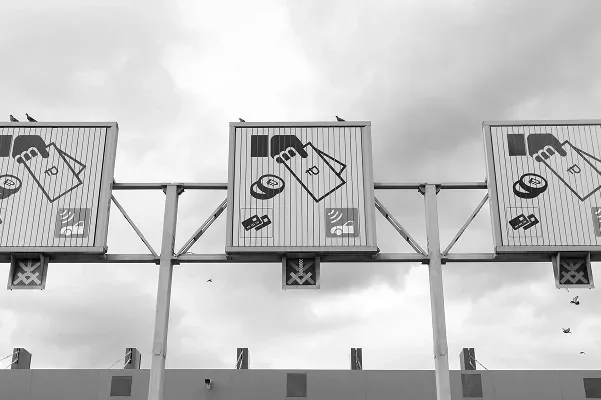
In the cost structure of a modern transport company, road tolls (tolls) are typically the second largest item after fuel - it is estimated that in international transport, they can consume from 15% to even 25% of all operational expenses. While base rates for motorway travel are set by governments and road managers, the final amount on the invoice depends on the chosen operator and the settlement method. If you don’t verify these costs regularly, your margin may be melting away unnecessarily.
In the TSL industry, there is a common belief that tolls are a “tax” that cannot be avoided. This is only half true. We cannot avoid the fee for the journey itself, but we can avoid a series of commissions and hidden costs that accumulate around the handling of these payments. Many carriers use the same on-board units (OBU) for years, treating them as a “necessary evil.” Meanwhile, the EETS (European Electronic Toll Service) market is changing dynamically, and loyalty to old contracts often means overpaying - much like an un-updated phone subscription or an old bank offer.
Where to Look for Savings? The Anatomy of Hidden Costs
For a dispatcher and company owner, simplicity is key - the truck has to drive, and the fees have to be settled. However, from a financial perspective, the devil is in the details of the contract with the tolling provider. When analyzing invoices, it is worth paying attention to four critical areas where money most often “leaks”:
1. Commissions and System Fees
A small commission on turnover is the market standard. However, some providers break it down into several items: a “system fee,” “credit insurance,” or additional percentage markups. These are often poorly visible on a consolidated invoice, but on an annual scale with a fleet of several or a dozen trucks, they create amounts in the thousands of euros.
2. OBU Operational Costs
Are you paying for the shipping of the device? Do you incur a cost for changing the registration number assigned to the box? And what if the truck is in the workshop for two weeks - does the operator charge an “inactivity fee”? In many older settlement models, each such operation is an additional 10, 20, or 50 euros added to the bill.
3. The Currency Trap (Spread)
This is often the most expensive yet least visible element. Road tolls in Europe are charged in many currencies: PLN, HUF (Hungary), CZK (Czech Republic), DKK (Denmark), SEK (Sweden), or CHF (Switzerland). If your provider converts these currencies into EUR at their own rate, they usually add a margin (spread). A difference of 1-2% on the rate, given a transport company’s annual turnover, results in massive amounts that you are handing over to the intermediary for nothing.
4. System Fragmentation
Using several different devices on the windshield is not just an aesthetic problem or a visibility issue for the driver. It is, above all, an administrative cost. Each system means a separate invoice, a separate deposit, and a separate complaint and accounting process.
EETS - The Standard Changing the Game
The answer to tolling chaos is the EETS (European Electronic Toll Service) system. Its premise is “one box, one contract, one invoice.” A good EETS device should support not only the main transit countries (Germany, France, Austria) but also specific markets (Poland, Hungary, Scandinavia) and additional infrastructure: bridges, tunnels, and parking lots.
Switching to a modern EETS system is the perfect moment to compare the fee table.
Solution Analysis: OMV SmartPass
As an example of a solution that aggressively fights additional costs, it is worth analyzing OMV SmartPass (based on Telepass technology). An analysis of this solution’s fee structure compared to market standards shows where costs can realistically be cut.
Cost Transparency - What do you NOT pay for?
Based on the operator’s technical data, the OMV settlement model eliminates most of the administrative fees that are standard with competitors.
| Fee Type | Market Standard / Competition | OMV SmartPass |
|---|---|---|
| System Fee (%) | Often charged | None |
| Credit Insurance (%) | Often charged | None |
| OBU Shipping Fee | Paid | None |
| Inactivity Fee | Paid (if truck is idle) | None |
| Registration Change | Paid | None |
| Early Return Penalty | Often applied | None |
| Annual Fee | Often applied | None |
| Currency Conversion Fee | Almost always added | None |
With OMV SmartPass, you pay a standard monthly device rental fee, an activation fee (personalization), and a commission (surcharge), but you remove the burden of numerous handling fees. Crucially - you don’t pay penalties for the truck standing still (e.g., during a slack period).
Conversion at ECB rates - the key difference This is probably the strongest point of this solution from a financial perspective. OMV SmartPass uses European Central Bank (ECB) reference rates. What does this mean in practice? ECB rates are average rates published daily, used for settlements between central banks. They do not contain the buy/sell margin (spread) imposed by commercial banks or other fuel card operators. This ensures that when paying for Hungarian or Czech roads, the settlement occurs at the best possible conversion rate on that day. This realistically lowers the total cost by 1-2%.
Reach and Convenience for the Dispatcher
The device works on a “Plug & Play” basis in most European countries, which drastically simplifies fleet management.
- Country Coverage: Austria, Belgium, Bulgaria, Switzerland, Czech Republic, Germany, Denmark, Spain, France, Croatia, Hungary, Italy, Norway, Poland (e-TOLL, A1, A4), Portugal, Sweden, Slovenia, Slovakia.
- Additional Infrastructure: The device automatically pays for transit through key tunnels (e.g., Liefkenshoek in Belgium, Karawanks tunnel), bridges (the famous Storebælt and Øresund connecting Denmark with Sweden), and selected secure parking lots (France, Italy).
For the dispatcher, this means an end to worrying about whether the driver has a vignette for a given bridge or cash for a tunnel. Everything is recorded automatically on one device.
List of All Roads, Bridges, Tunnels, and Ferries Covered by OMV SmartPass:
| Country | Toll Type / Object | Detailed Sections and Additional Information |
|---|---|---|
| Austria | Tolls + Special Sections | Gleinalm/Bosruck Tunnel (A9), Tauern Tunnel (A10), Karawanken Tunnel (A11), Inntal Autobahn (A12), Brenner Motorway (A13), Arlberg Tunnel (S16), Europabrücke Bridge |
| Belgium | Tolls | Liefkenshoek Tunnel (settled within the French network) |
| Bulgaria | Tolls | Nationwide system |
| Croatia | HAC Network (Motorways) | A1, A3, A4, A5, A6, A7, A10, A11, and road D425 |
| Denmark | Bridges and Ferries | Fjordforbindelsen Bridge, Øresund Bridge (to Sweden), Storebælt Bridge, ferries per easygo.com |
| France | Tolls + Objects | Millau Viaduct, Bridges: Tancarville, Normandy, de l’île de Ré; Tunnels: Puymorens, Lyon bypass |
| Secure Parking | Dunkirk, Calais, Valenc Tev, Bézsiers, RUNGIS, CCI DEUX-SEVRES (A10/A83), DELTA PARK | |
| Spain | Tolls | Truck parking: Montseny (AP-7), Porta Barcelona (AP-7) |
| Germany | Tolls | Nationwide system |
| Norway | Tolls | Svinesund Bridge, other bridges, tunnels, and ferries per easygo.com |
| Poland | e-Toll (National) | Except for private motorways |
| A4 Motorway | Katowice - Kraków section (separate system) | |
| Portugal | Tolls | Settled within the Spanish network; Bridges: 25th of April, Vasco da Gama |
| Slovakia | Tolls | Nationwide system |
| Slovenia | Tolls | Nationwide system |
| Switzerland | Tolls | Nationwide system |
| Sweden | Bridges | Øresund Bridge (between Denmark and Sweden) |
| Hungary | Tolls | Nationwide system |
| Italy | Tolls | Villa San Giovanni - Messina Ferry; Sadobre Truck Park (A22) |
Summary
Cost optimization in a transport company does not have to involve drastic cuts. Sometimes, a simple change of toll collection tool is enough. When choosing a toll provider, don’t just look at the device’s range, but above all at the table of additional fees and the currency conversion mechanism.
If your company is looking for savings and transparency, a solution like OMV SmartPass can bring measurable benefits from the very first month of use.
Would you like to find out how much your company can save by switching to OMV SmartPass?
Ask a relevant follow-up question to see how this transition could specifically benefit your current fleet size and primary international routes.