
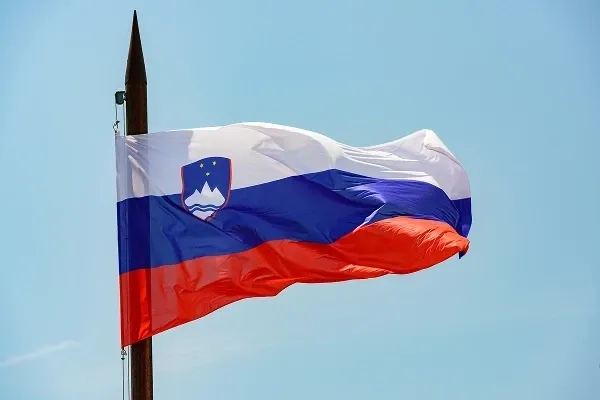
For international carriers, Slovenia is a small but strategically vital transit country. It serves as the primary gateway connecting Central Europe with Italy, Adriatic ports, and Balkan markets. Despite its modest area, Slovenia’s dense and modern motorway network requires fleet managers to plan budgets with surgical precision.
In 2026, road tolls in Slovenia continue the clear trend of penalizing outdated fleets while heavily rewarding ecological innovation. Understanding how Slovenian truck tolls are calculated is essential to protecting your margin on these short but costly Alpine stretches.
How does the DarsGo system work in 2026?
Slovenia was one of the first countries in the region to completely move away from classic vignettes and booths for heavy transport in favor of a fully electronic toll collection system using microwave technology (DSRC). The DarsGo 2026 system is mandatory for every vehicle with a gross vehicle weight (GVW) exceeding 3.5 tonnes.
The rule is simple: the absence of an active on-board unit on the windshield is a guaranteed and very heavy fine. The Slovenian motorway operator (DARS) utilizes a massive network of stationary gantries with ANPR cameras and mobile road control patrols.
💡 Facts from Slovenian routes:
- Electric Vehicles drive for free: Slovenia is a pioneer in promoting zero-emission heavy transport. Under current regulations, free motorways for electric trucks in Slovenia is official law. Fully zero-emission vehicles are exempt from kilometer tolls, making the country highly attractive for modern fleets.
- The Karavanke Tunnel: Transit through the famous border tunnel connecting Slovenia with Austria often involves a separate charge independent of standard DarsGo kilometer fees—a detail new dispatchers often overlook when calculating profitability.
Full Breakdown of Rates: How Much Does a Kilometer Cost in Slovenia?
Wondering how much a kilometer costs in Slovenia for a standard truck? The table below presents complete, verified rates for 2026, divided by weight category, axle count, and emission standards. Values are provided in Euro (€) per 1 kilometer.
(Note: 100% electric vehicles in all categories below are exempt from tolls—rate 0.00 €).
| Vehicle Mass | Axles | Euro 6 | Euro 5 | Euro 4 | Euro 3 | Euro 2 | Euro 0-1 |
|---|---|---|---|---|---|---|---|
| 3.5 – 7.49 t | 2-3 | € 0.15 | € 0.17 | € 0.19 | € 0.21 | € 0.23 | € 0.25 |
| 7.5 – 11.99 t | 2-3 | € 0.17 | € 0.19 | € 0.21 | € 0.24 | € 0.26 | € 0.28 |
| 12 – 18 t | 2-3 | € 0.19 | € 0.21 | € 0.24 | € 0.26 | € 0.29 | € 0.31 |
| > 18 t | ≤ 3 | € 0.20 | € 0.23 | € 0.26 | € 0.28 | € 0.31 | € 0.34 |
| > 18 t | 4 | € 0.34 | € 0.38 | € 0.43 | € 0.47 | € 0.52 | € 0.56 |
| > 18 t (HGV Set) | ≥ 5 | € 0.41 | € 0.47 | € 0.52 | € 0.58 | € 0.63 | € 0.69 |
Cost Analysis for the Carrier
Looking at the Slovenian motorway price list, the drastic difference in costs based on equipment generation is obvious.
Consider a standard tractor-trailer combination (over 18 tonnes, 5+ axles):
- Sending a modern Euro 6 vehicle costs € 0.41 per kilometer.
- An older Euro 3 fleet member costs € 0.58 per kilometer.
- The difference is 17 euro cents per kilometer. On a 200 km transit (e.g., from the Austrian to the Croatian border), one round trip with an older vehicle results in a loss of roughly € 68 compared to a modern tractor.
This brutal math forces rigorous equipment optimization. Furthermore, for international companies, Slovenia settles in Euro, which introduces additional risks related to bank spreads if a professional settlement system isn’t utilized.
Discover Our Route Calculator
You already know the rates, but manually calculating costs for a route spanning thousands of kilometers is a direct path to errors. Our tool does it for you.
- Precision to the cent: Automatically calculates road tolls based on axles, weight, and Euro or CO2 emission class for every country.
- The Choice is Yours: Compare alternative routes to see differences in travel time and final toll costs clearly.
- Fleet at Your Fingertips: Save your specific vehicle profiles; the calculator applies the correct rates instantly.
- Real-time Optimization: Better price your freight by seeing the total infrastructure cost before sending the truck out.
Test it for free and without obligation. We offer a free trial period so you can see how the calculator handles your most frequent routes.
Want to see it in practice? Contact us for more details—we will set up your access in minutes.
How to Automate Tolling and Protect Your Profits?
Managing a fleet where every vehicle needs a separate windshield box for Germany, Austria, Czechia, and Slovenia is an administrative nightmare. Fines for lacking a DarsGo device in Slovenia range from several hundred to several thousand Euro, and a vehicle impoundment by local authorities can break your entire supply chain.
Instead of worrying about whether the driver topped up a local balance at the border, it is time to move your business to the European standard.
The ideal solution is OMV Smart Pass EETS. This is one professional on-board unit that automatically communicates with tolling systems across nearly all of Europe—including Slovenia’s DarsGo.
Why is OMV Smart Pass the profitable choice?
- Full EETS Compatibility: One device replaces the need for a local DARS OBU. Cross borders (e.g., Austria-Slovenia) without stopping or registering with new operators.
- No Currency Risk: All kilometers driven in Slovenia appear on one consolidated invoice alongside your other European routes. Clear, stable conversion rates protect your margin.
- Clean Documentation: Receive correctly issued infrastructure invoices that allow for fast foreign VAT refunds.
- Remote Parameter Changes: Does the driver need to attach a trailer? You can edit the axle count from an intuitive interface, and the system automatically selects the correct rate for Slovenia, protecting you from fines.
Do not let rising infrastructure costs in the Balkans stall your company’s growth. Opt for innovation, integrate Slovenian road tolls with OMV Smart Pass EETS, and focus on what you do best—securing profitable orders across Europe.
How many of your current Alpine routes involve transit through Slovenia, and have you audited the currency conversion costs on your recent DarsGo invoices?