
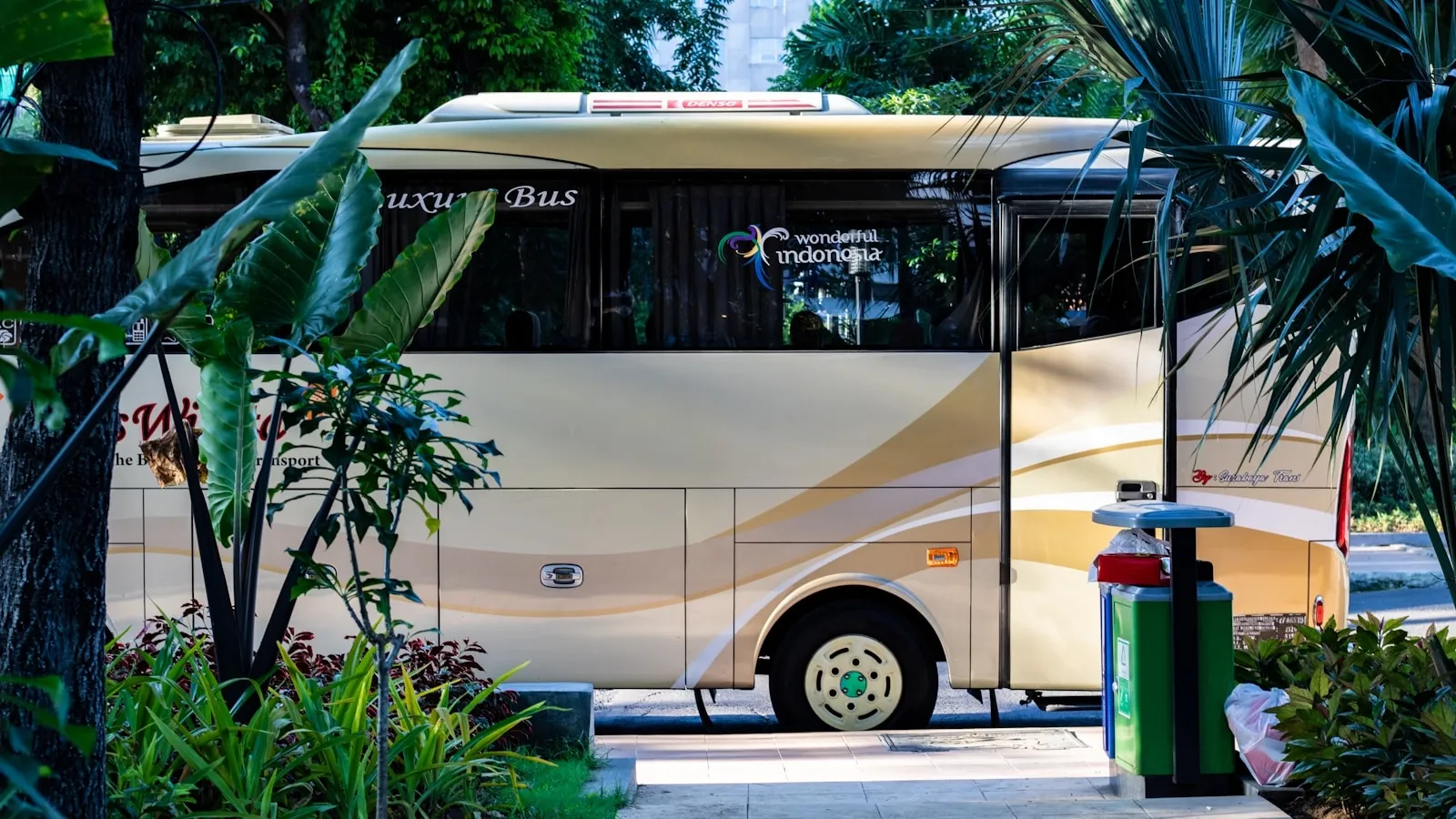
VDL Bus & Coach is a Dutch brand that combines two very different worlds in a single fleet. On one side sit the touring and long-distance Futura coaches, powered by diesel DAF/PACCAR MX engines. On the other side sit the fully electric Citea city buses, which run on electricity alone. This guide explains transport telematics from the ground up, then shows how one platform covers the entire VDL fleet, from CAN diagnostics in the Futura to battery monitoring in the Citea.
A short story from the road
An electric VDL Citea SLFA was coming back from the morning peak on a city line. The dispatcher saw an alert on the platform: energy use clearly higher than usual, and estimated range dropping faster than it should for that route. Instead of waiting for the bus to stall halfway through a run, the return for charging was planned ahead and the vehicle was swapped for a spare.
It turned out that one battery section was losing health, and the air conditioning was drawing more energy in the heat. The data was on the platform long before the driver would have noticed anything. This is the value of telematics in practice: a decision made on data, before the problem stops the vehicle on the line. In a diesel Futura the same mechanism prevents a tow after an engine fault is reported.
Transport telematics, what is it?
Transport telematics is the combination of vehicle position (GPS), technical data from the vehicle electronics (the CAN bus) and the transmission of that information over the cellular network to a server you open in a browser. In practice telematics turns a coach or bus into a data source that tells you, moment to moment, where the vehicle is, how it is driven and what is happening to its components.
For a transport operator this means the end of working on guesswork. Instead of calling the driver to ask for a position, you check it on the map. Instead of waiting for a fuel or charging invoice, you have consumption in real time. Instead of reacting to a breakdown after the fact, you get an alert the moment the vehicle electronics detect a problem.
What a telematics system is made of
A telematics system has four elements, whether it runs in a coach or in an electric bus:
- An on-board device connected to power, a GPS antenna and the vehicle CAN bus.
- The CAN bus, the internal vehicle network through which data from all systems flows, including the engine, the tachograph and, in electric vehicles, the battery management system.
- Data transmission over the 4G/LTE cellular network, so information reaches the server in real time, including abroad.
- A cloud platform with maps, reports, alerts and files, available from a browser and through an API.
Modern telematics does not force its way into the vehicle electronics. It uses the factory, safe data output, which in buses and coaches is the Bus-FMS interface.
Telematics for road transport versus telematics for logistics
It is worth separating two terms that are often confused. Road transport telematics focuses on the vehicle: location, fuel or energy use, diagnostics, driving style, tachograph. This is the technical and operational data collected by the on-board device.
Transport and logistics telematics goes one step further and links that data with company processes: route planning, trip settlement, order and document management. Here the vehicle data flows into a fleet management system or into ONYX TMS, where it becomes the basis for business decisions rather than just a picture on a map.
In short: road telematics tells you what the vehicle is doing, while logistics telematics turns that into decisions about the whole fleet. In a well-deployed system both levels run on the same data, with no manual re-keying.
Why telematics concerns every VDL vehicle
VDL Bus & Coach is an interesting case, because two different drivetrains meet in one brand. Telematics handles both, but it pulls different data from each.
VDL Futura coaches (FMD2, FHD2, FDD2 double-deck) with the DAF/PACCAR MX-11 and MX-13 engine
The Futura family covers touring and long-distance coaches. It comes in several body variants:
- Futura FMD2, a lower, universal coach for scheduled and occasional services.
- Futura FHD2, a higher long-distance coach for international routes and tourism.
- Futura FDD2, a double-deck coach with the largest passenger capacity.
All of them run DAF/PACCAR MX-11 and MX-13 engines, the same engine families that power DAF trucks. This is the key fact for ONYX telematics, because our confirmed CAN diagnostics for DAF transfers directly to the Futura. We read fault codes, fuel use, RPM and driveline parameters as confidently as in DAF tractors, which we cover in depth in the DAF telematics guide.
Electric VDL Citea city buses (LF, LE, SLF, SLFA) with a ZF drivetrain and VDL High Energy battery
The Citea line covers city buses, and in the new generation it is fully electric. The variants differ in length and capacity:
- Citea LF (Low Floor), the classic low-floor city bus.
- Citea LE (Low Entry), with a low entry section and a raised rear, for suburban routes.
- Citea SLF (Super Low Floor), fully low-floor for intensive city service.
- Citea SLFA (Super Low Floor Articulated), the articulated bus with the largest capacity.
The drivetrain is built around ZF axles and gear units, and energy comes from VDL High Energy batteries, charged by a plug-in connector or by pantograph at a terminus or in the depot. Here telematics works quite differently from diesel: instead of fuel use it monitors battery state and health, energy consumption and charging sessions. That is a separate data set, which we discuss further below.
What telematics gives you in a VDL fleet
Below is the full range of functions, split by what applies to the diesel Futura, the electric Citea, and both groups at once.
24/7 GPS monitoring and route history
You see where each VDL vehicle is, which route it took and where it stopped. Route history works the same for scheduled lines, occasional services and city transport. For a Futura coach it means settling a tour and confirming the pick-up time. For a city Citea it means checking punctuality on the line and compliance with the timetable.
Remote download of DDD tachograph files
Coaches and buses over 3.5 tonnes carry the same tachograph duty as trucks, a topic we cover in more detail around the tachograph for vans rules. A device connected to the CAN bus talks to the tachograph and automatically downloads DDD files from the driver card and from the tachograph memory.
The duties are firm: driver card data must be downloaded at least once every 28 days, and the tachograph memory at least once every 90 days. The penalty for a missed download reaches PLN 10,000 per vehicle. Telematics sets a schedule with a margin and downloads the files automatically, and they land encrypted in the cloud with a timestamp, ready for inspection.
CAN diagnostics and fault codes in Futura coaches
This is the strongest area for the diesel part of the VDL fleet. Because the Futura runs DAF/PACCAR MX-11 and MX-13 engines, telematics reads fault codes (DTC) straight from the electronics, exactly as in DAF trucks, where reading is confirmed on our side. As a result:
- You learn about a fault before the driver reports it.
- You know exactly which component is reporting the problem.
- You plan the repair ahead, because you know which part will be needed.
- You reduce the risk of stranding a coach full of passengers on an international route.
Battery monitoring in electric Citea buses
What does telematics give you in an electric VDL Citea bus?
In electric Citea buses telematics reads data from the CAN bus and the battery management system (BMS). This is a set of parameters that diesel simply does not have:
- State of charge (SoC) in percent, in real time, for every bus on the line.
- Battery health (SoH), the real capacity lost against the factory state, crucial for planning replacements and warranty settlements.
- Energy use in kWh per kilometre, comparable across vehicles, lines and drivers.
- Estimated range based on current SoC and the consumption profile, with an alert when it drops below a threshold.
- Charging sessions, both plug-in and pantograph, with duration, energy drawn and the location of the point.
This way you avoid a situation where a bus runs out of energy on the route, and at the same time you gather data on the real health of the battery, the most expensive part of an electric vehicle.
Fuel and driving style control (Futura) and energy efficiency (Citea) with driver scoring
The system reads driving parameters from the CAN bus and builds driver scoring, but it measures two different things depending on the drivetrain. In the Futura what counts is real fuel use, engine RPM, cruise control use, harsh acceleration and braking. Fuel cost for the diesel fleet is worth controlling further through fuel cards.
In the Citea the measure is energy efficiency: kWh per kilometre, smooth driving, use of regenerative braking and the energy drawn by heating and air conditioning. In both cases you reward the best drivers and train the weaker ones on concrete data, not on impressions.
Alerts, geofencing and service reminders
The system warns of a fault at once, reminds you of technical inspection deadlines and key service duties. Geofencing notifies you when a vehicle enters or leaves a defined area, for example a depot boundary, a city zone or an occasional-service route. In the Citea a separate group of alerts covers battery thresholds: low SoC, cell overheating or an unusually fast range drop.
The Bus-FMS interface in VDL vehicles: why it is the foundation
Every modern VDL vehicle can share data through the Bus-FMS interface, the bus variant of the open FMS (Fleet Management System) standard. It is the same foundation on which truck telematics rests, but extended with data typical of public transport.
How does Bus-FMS differ from FMS in trucks?
FMS in trucks provides data on driving, fuel, operation and the tachograph. Bus-FMS includes all of that and, on top of it, data groups specific to buses and coaches:
- door status and cycles (opening, closing, lock), important for safety and stop statistics,
- the stop request signal and information on halting,
- data on passengers and vehicle kneeling,
- in electric vehicles, parameters of the high-voltage system and the battery.
This way telematics in a VDL fleet sees not only how the vehicle drives, but also how it works in its role as a means of public transport.
Bus-FMS data groups table
| Data group | Example parameters |
|---|---|
| Driving | vehicle speed, tachograph speed, engine RPM, pedal position |
| Fuel / energy | fuel use and fuel level (Futura), energy use, battery SoC and SoH (Citea) |
| Operation | distance, engine hours, service distance, fluid temperatures |
| Doors / stop | door status, stop request signal, vehicle kneeling |
| Driver / tachograph | tachograph data, driving time, driver identification |
| Identification | VIN, FMS software version |
Why a safe data output protects the warranty and the vehicle electronics
For a VDL fleet owner this is a practical matter. A direct tap into the internal vehicle bus can affect the warranty and the reliability of the electronics, especially in an electric bus, where the high-voltage system and the BMS are sensitive to unauthorised interference. Bus-FMS is a factory-intended, safe output of the same data, which ONYX telematics uses. You read the full set of parameters with no risk to the vehicle systems.
VDL telematics versus factory systems and DAF Connect
Because the Futura runs DAF engines, the factory DAF Connect ecosystem appears in the background, showing location, fuel use and vehicle utilization. It is a good tool if you look only at the diesel part of the fleet and want to stay in the ecosystem of the engine maker.
The advantage of independent telematics shows up, however, with a mixed diesel and EV fleet, and that is the essence of VDL. Factory engine systems will not cover the electric Citea, and dedicated city-bus tools will not show Futura engine diagnostics. Independent single-vendor telematics shows Futura coaches and electric Citea buses in one panel, on one set of reports and with one payment term, whether the vehicle runs on diesel or on electricity.
How ONYX telematics reads data from VDL vehicles
Our fleet telematics works on any brand and any drivetrain, and for VDL it covers both parts of the fleet at once:
- CAN diagnostics and fault codes in the Futura, based on the confirmed reading for DAF/PACCAR MX engines.
- Citea battery monitoring: SoC, SoH, kWh per kilometre, range and plug-in and pantograph charging sessions.
- Remote DDD download from the tachograph and driver card, on the 28 and 90 day schedule.
- 24/7 GPS, route history and geofencing for coaches and city buses.
- Fuel and driving style (Futura) and energy efficiency (Citea) with driver scoring.
- Inspection reminders and real-time fault alerts and battery-threshold alerts.
- Installation through the OBD socket in a few minutes, or full CAN integration with the tachograph and battery data, done by a technician.
- Browser access, an API and a ready integration with ONYX TMS.
The approach to diagnostics is best seen on the base engine brand, which we describe in the DAF telematics guide, with the broader context of the FMS standard covered in the Volvo telematics guide.
VDL telematics for different models and uses
| VDL model | Typical use | What benefits most from telematics |
|---|---|---|
| Futura FMD2 | scheduled and occasional services | CAN diagnostics, fuel use, remote DDD |
| Futura FHD2 | tourism and international routes | fault codes, GPS abroad, driving style |
| Futura FDD2 | high-capacity services (double-deck) | diagnostics, fuel control, scoring |
| Citea LF / LE | city and suburban transport | battery SoC and SoH, kWh per kilometre, range |
| Citea SLF | intensive city transport | charging sessions, energy efficiency, battery alerts |
| Citea SLFA | highest-flow lines (articulated) | battery monitoring, punctuality, geofencing |
Where to start with a VDL telematics rollout
- Define the goal. For the Futura it is most often reducing downtime and controlling fuel use, and for the Citea it is controlling battery health and making sure the bus reaches the end of the line.
- Check the equipment and Bus-FMS. Most VDL vehicles share data through the Bus-FMS interface, which simplifies and speeds up installation and protects the warranty.
- Choose the scope. GPS alone, GPS with DDD download, or the full package with engine diagnostics (Futura) or battery monitoring (Citea).
- Plan the installation. Through OBD it takes a few minutes, while full CAN integration with the tachograph and battery data is a technician job, usually 1 to 3 hours per vehicle.
- Configure the platform. DDD schedule, battery and fuel alert thresholds, geofencing zones and reports for the whole mixed fleet.
How long does it take to install telematics in a VDL coach?
Installation through the diagnostic OBD socket takes a few minutes and needs no workshop visit. Full integration with the CAN bus, the tachograph and battery reading on the Citea is a technician job, usually 1 to 3 hours per vehicle. After installation we configure the schedules and alert thresholds, so the vehicle reports a complete data set from day one.
Do you want one platform to cover the whole VDL fleet, from diesel Futura coaches to electric Citea buses? Get in touch and we will tailor the scope to your transport profile.
Bibliography and sources
- FMS-Standard and Bus-FMS, official documentation of the Fleet Management System interface for buses and coaches, www.fms-standard.com
- ACEA, Heavy Truck and Bus Electronic Interface Group, description of the FMS standard and its bus variant
- VDL Bus & Coach, product documentation for the Futura coaches (FMD2, FHD2, FDD2) and the electric Citea buses (LF, LE, SLF, SLFA), www.vdlbuscoach.com
- DAF Trucks, information on the PACCAR MX-11 and MX-13 engines and the DAF Connect system, www.daf.com
- Regulation (EU) No 165/2014 on tachographs in road transport, regarding data download deadlines
- ONYX product materials on the scope of diagnostics, DDD download and battery monitoring of electric vehicles