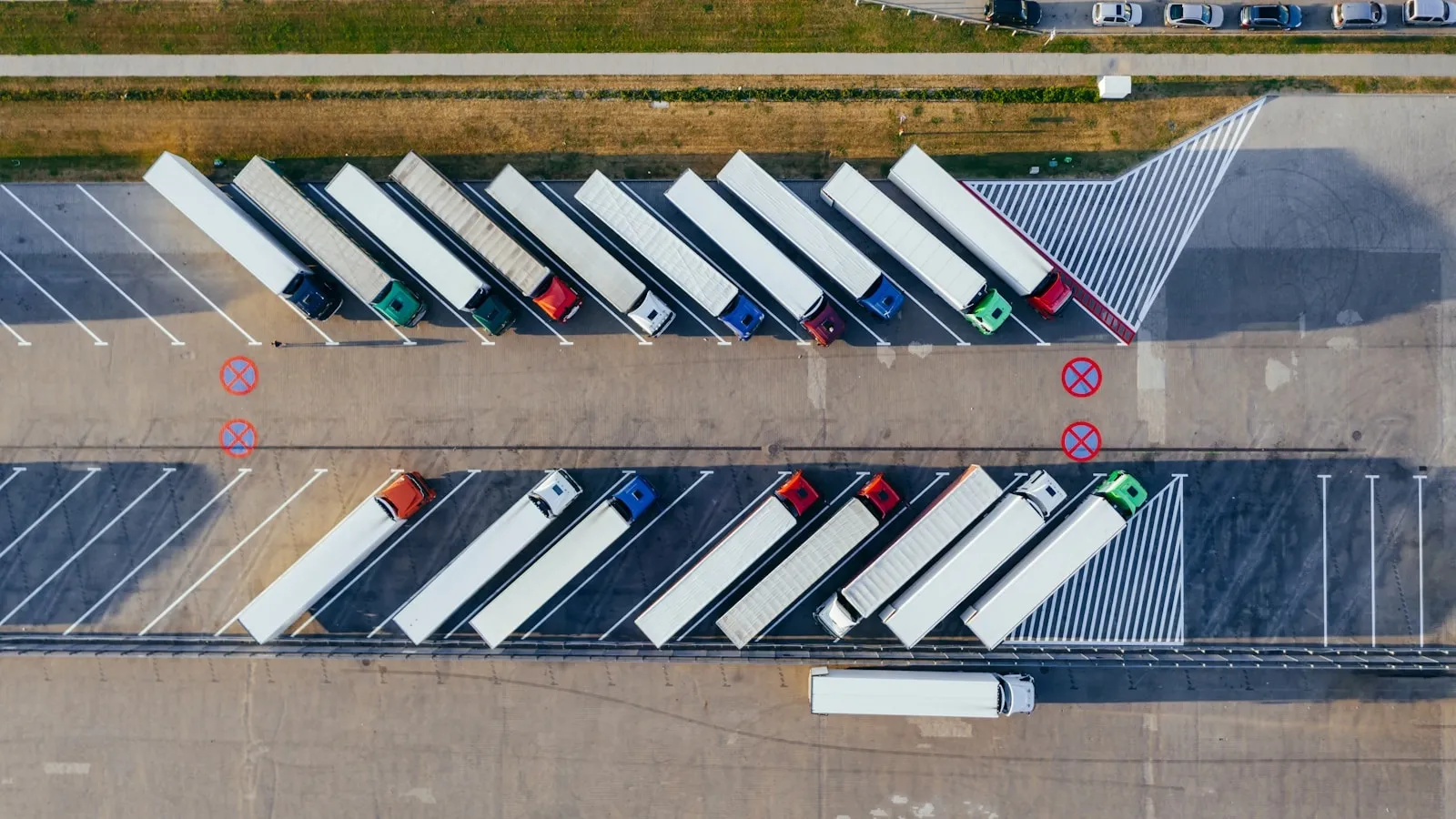
How do you find loads so your truck does not come back empty? Where do you look for transport orders? Look in several channels at once: load boards, shippers directly, tenders, regular forwarding partners and orders sent straight to your TMS.
This guide is for carriers who run an articulated truck or a rigid truck on international routes. You get six ways to find loads, a method to judge the whole trip and a checklist for vetting a client.
One channel is rarely enough. You gain the most when you combine several and plan the route in both directions.
Start with the route, not the load
A good load is a good loop, not a high one-way rate. A well-paid trip to Italy loses its value when you drive several hundred kilometres back empty from the unloading point.
Before you accept a load, check five things:
- Loading and unloading country. Where you finish, and how much demand for loads that region has.
- The next load. Where your next trip starts, and how many kilometres you drive empty to reach it.
- Waiting time. Loading and unloading windows, queues at the ramp, weekend driving bans.
- Costs along the way. Fuel and tolls in every country on the route. A review of international route costs helps here.
- Driver working time. Whether the route fits the driving and rest times without the risk of a fine.
Calculate the whole loop in a simple table. Fill in each row separately for the outbound and the return trip, with your own figures, because every fleet has different costs.
| Item | What to enter | What to watch |
|---|---|---|
| Freight | The rate from the order, in the order currency | The payment term and exchange rate change what you really earn |
| Fuel | Kilometres times consumption, at prices on the route | Consumption loaded and empty is different |
| Tolls and crossings | Road, tunnel, bridge and ferry charges in every country | Rates usually depend on vehicle weight and emission class |
| Empty run to the next loading | Kilometres from unloading to the next loading point | Easy to miss when you look only at the rate |
| Waiting time and breaks | Hours at the ramp, driver breaks, weekend bans | Check whether the order includes a fee for waiting time |
| Trip result | Freight minus all costs above | Compare the result of the whole loop, not of a single trip |
The sum of the outbound and return trips decides the result. Calculate the rate per kilometre over the whole distance, empty kilometres included, as described in how to recalculate your rate per km.
Load boards: when they work and when they do not
A load board (freight exchange) is a platform where companies publish loads and free vehicles. The parties agree the rate, dates and payment terms themselves.
Several large load boards operate in Europe, for example Trans.eu, TIMOCOM, Cargopedia and Teleroute. Each has its own access and company verification rules, so read them before you register.
A load board usually fits in three situations:
- Spot load. You need a trip fast because the plan changed.
- Return load. You look for freight close to the unloading point.
- Gap in the plan. You have a free vehicle for a day or two.
Set filters for your fleet: body type, loading country and region, date and requirements (for example ADR, reefer, walking floor). Save searches for the routes you drive most often, and check offers in both directions.
For every offer, check that the load is still available, that the company details are complete and consistent, and what the payment term is. Verification on the platform is a good start, but you decide who you drive for.
How to read a load offer
A good offer gives full addresses, time windows, type of goods, weight and number of pallet places. If these details are missing, ask before you talk about the rate. For a reefer load, also check the required temperature range and the clause on the temperature recorder.
Check whether it is a full truckload or a part load. A part load can fill a return trip well, but you have to match the next unloading points.
Free vehicle tomorrow: the first three steps
When the plan falls apart and a vehicle stands free, act in this order:
- Start from the unloading point. Look for a load within the radius the driver can reach empty in their working time.
- Call your regular contacts. Shippers and forwarders you already work with may have a load they have not published yet.
- Then open the load board. Use your saved searches, check the company in the registers and confirm the terms in writing before the truck leaves.
Regular clients and shippers directly
A shipper who regularly sends goods on your route gives you the most predictable loads. You plan ahead and talk to the company that owns the goods.
Go to a shipper with specifics. Show the routes you drive every week, your trailer types and equipment, how you report vehicle position and the documents you deliver after unloading.
Start with companies that load close to your regular unloading points. You help such a shipper, because your vehicle is on site when the goods are ready.
Make your first trips count. On-time loading, quick notice of any delay and complete documents after unloading build trust better than a lower rate.
Shipper tenders
In a tender, a shipper publishes routes, expected volume and requirements, and carriers submit offers. A won tender gives you loads for a longer period, so you plan your fleet more easily.
Invitations usually come from shippers’ logistics departments or through tender platforms. Before you bid, check that you have the vehicles and drivers for the declared volume for the whole contract period.
Calculate the rate for the whole loop, including the return from the unloading point. Prepare your Community licence, carrier’s liability insurance, fleet description and vehicle position reporting in advance.
Before you sign, ask about the rules for waiting time, volume changes and the payment term. These terms also decide the result of the contract.
Regular forwarding partners
Many forwarders look for regular carriers on specific lanes and run partner programmes for them. The start is easier than with a shipper, because a forwarder collects loads from many clients.
Show the forwarder the same specifics as a shipper: routes, trailer types and vehicle availability during the week. Agree the rate, payment term and waiting time rules in writing.
A forwarder adds its own margin, so your freight can be lower than with a shipper. In return, you get loads without building a relationship with each shipper separately.
Each channel has a different margin and a different risk. We cover this in more detail in sources of orders and their pathologies.
Return loads and regular corridors
Empty running is a cost the whole industry sees. According to Eurostat, 21.8% of the kilometres driven by goods vehicles in the EU in 2025 were driven empty.
In national transport the share was 26.0%, and in international transport 12.9% (Eurostat, Road freight transport by journey characteristics, 2025 data).
Source: Eurostat, Road freight transport by journey characteristics, 2025 data.
Eurostat links the lower share of empty kilometres in international transport to the economic importance of return loads. So plan the return together with the outbound trip, in three steps:
- Choose a few corridors. For example Poland and northern Italy, or Poland and Benelux. On routes you know, you find loads in both directions faster.
- Check the return before you accept the outbound trip. Before you confirm a load to Germany or the Netherlands, look at the loads from Germany or the Netherlands back to Poland near the unloading point.
- Build clients at both ends of the route. A regular shipper in the unloading country turns a random return into a repeat trip.
On routes through several countries, also calculate tolls. A review of toll costs on the route helps here.
Orders directly in your TMS
Orders also arrive straight in the system you use to manage your fleet. That is how Transport Orders in ONYX TMS work: a verified shipper sends the order directly to a verified carrier.
The shipper sets the maximum price, and the system picks the best vehicle for the order. You see the payment term before you accept or decline the order.
You receive the full amount the shipper pays, with no commission.
Orders are already in the system, with loading in Poland. We keep adding more countries and regions.
Look for a return load to Poland in the other channels from this guide.
To take part in Transport Orders, you need ONYX TMS and compatible telematics. See Transport Orders for carriers in ONYX TMS.
How to check a load and a client
How do you check a transport client? Compare the company details with public registers and confirm the order terms in writing.
Decline the order if the rate is clearly off the market, someone rushes you or someone changes the payment details.
Check in this order:
- Company details in registers. Look the company up in the business register of its country. For Polish companies, that is CEIDG for sole traders and KRS for commercial companies. Check the EU VAT number in VIES. For a Polish company, check the bank account in the Polish VAT taxpayer register, which lists taxpayers’ settlement accounts (Article 96b of the Polish VAT Act).
- Order details. Addresses, time windows, type and weight of goods, required documents, waiting time rules.
- Transport documents. In international transport you usually drive on a CMR consignment note, and with additional documents for some goods. Agree who prepares them and who you hand them to.
- Payment. The term and currency must be written in the order, together with the payer’s details.
- Communication. The client confirms the terms in writing, and the contact details are the same in every message.
- Insurance. Check that your carrier’s liability insurance covers these goods and this route.
Warning signs:
- a rate clearly higher or lower than usual on the same route,
- pressure to decide immediately,
- a change of bank account number during the cooperation,
- a change of loading or unloading place without explanation,
- an email address on a domain similar to the company’s, but not the same.
Repeat the check with regular partners too, because company details change. In a dispute about payment or damage, ask a lawyer.
The payment term is part of the rate
The same rate means something different with a short and with a long payment term. Until the payment date, you finance fuel, tolls and driver wages yourself.
Check whether the term runs from unloading or from delivery of the documents. In the second case, send the documents right away, because every day of delay moves the payment.
Choose the way that fits your fleet
Each channel has its place in the plan. The table below helps you build your own mix.
| Way | When it fits | What to watch |
|---|---|---|
| Load board | Spot load, return, gap in the plan | Offer availability, company details, payment term |
| Shipper directly | Regular routes and steady volume | Takes time to build the relationship |
| Shipper tender | Loads for a longer period | Requirements and preparing the offer |
| Regular forwarding partner | Specific lanes, easy start | Freight can be lower than with a shipper |
| Transport Orders in ONYX TMS | Loads from Poland, no commission | You need ONYX TMS and compatible telematics |
| Return loads and corridors | Long routes in both directions | Plan the return before you accept the outbound |
Start with the route you know best. If you carry loads from Poland, see how Transport Orders in ONYX TMS work.